

Tile flooring and stone in north Jersey
Porcelain, ceramic and natural stone, set over a substrate chosen for the room rather than whatever was already there. Herringbone, checkerboard, straight lay, or a border.
What sits under the tile is the whole job
Tile is rigid and grout is more rigid still, so anything that flexes underneath will eventually show up as a crack along a joint. A wood subfloor that moves underfoot gets addressed before any tile is set — either cement board fastened down properly, or an uncoupling membrane that lets the subfloor move a little without dragging the tile with it.
In a bathroom or anywhere near water, that substrate also has to be waterproof, and waterproof is a system rather than a product: the membrane, the corners, the changes of plane and the penetrations all have to be handled or the weakest one decides the outcome. Bathroom failures almost never show up in the bathroom — they show up two years later as a stain on the ceiling below.
Full coverage, and why hollow tiles sound wrong
Mortar gets combed in one direction and the tile set into it so the ridges collapse and fill, rather than trapping air. A tile with voids under it sounds hollow when you walk it and cracks the first time something heavy lands on the unsupported spot.
Large-format tile makes this harder, not easier — the bigger the tile, the flatter the substrate has to be and the more the mortar has to do to make up the difference. That is where back-buttering comes in, and it is why a large-format floor takes longer than the same area in small tile.
Layout, before anything is stuck down
The field gets dry-laid first to find where the cuts land. Done properly you get full tiles where the eye goes — walking into the room, along the main sightline — and the cut pieces end up under the vanity, behind the door, along the wall the sofa sits against.
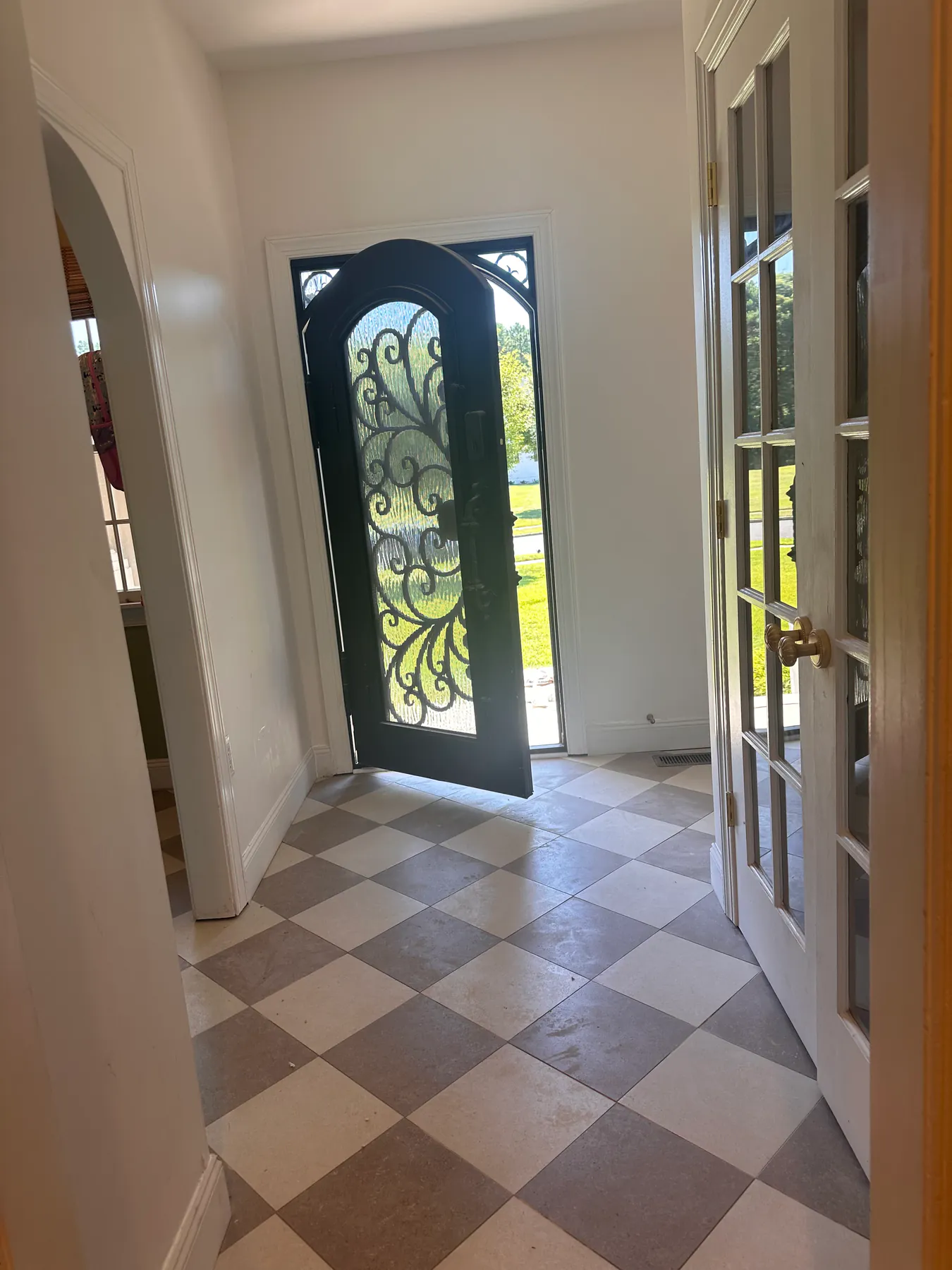
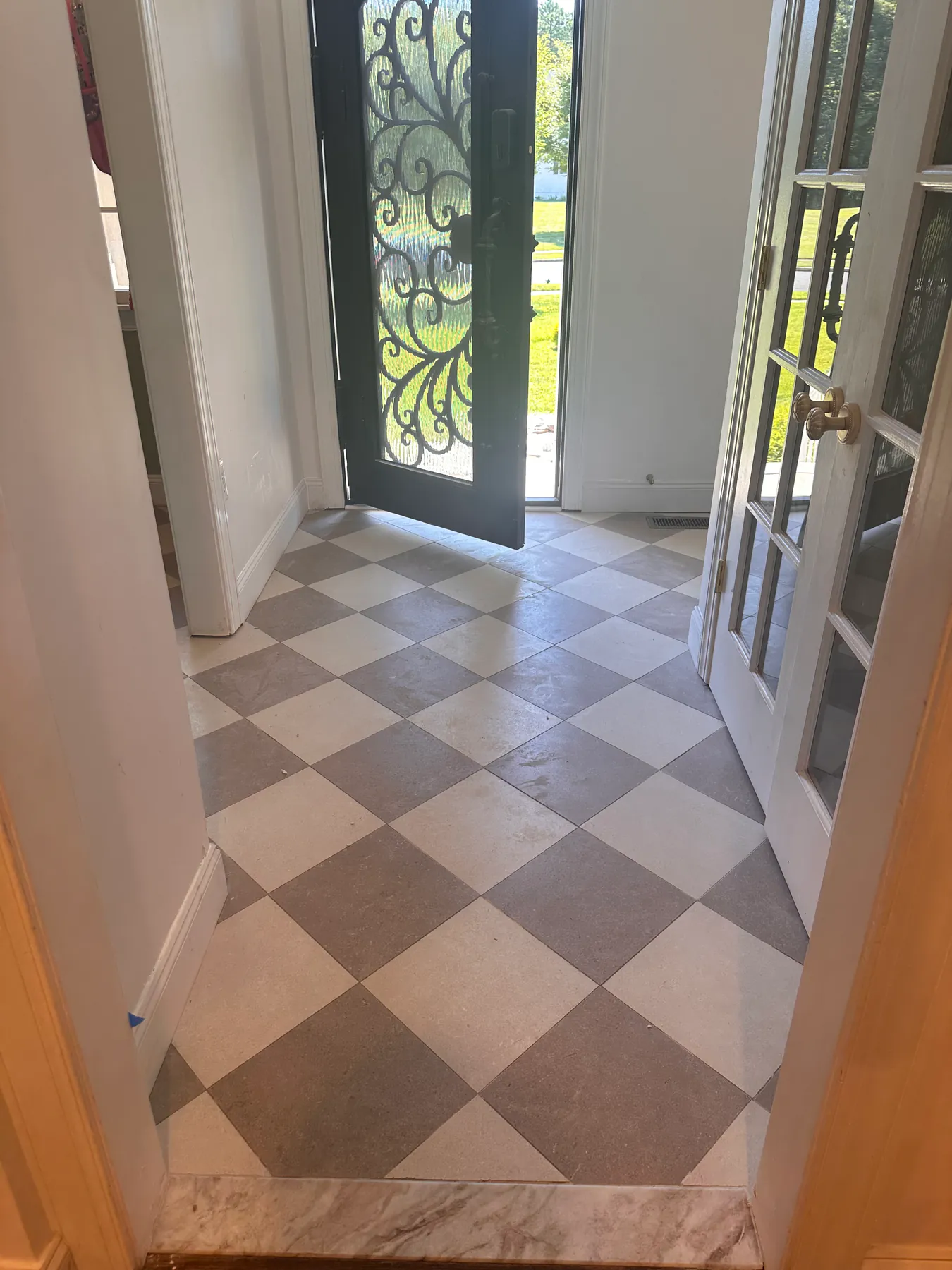
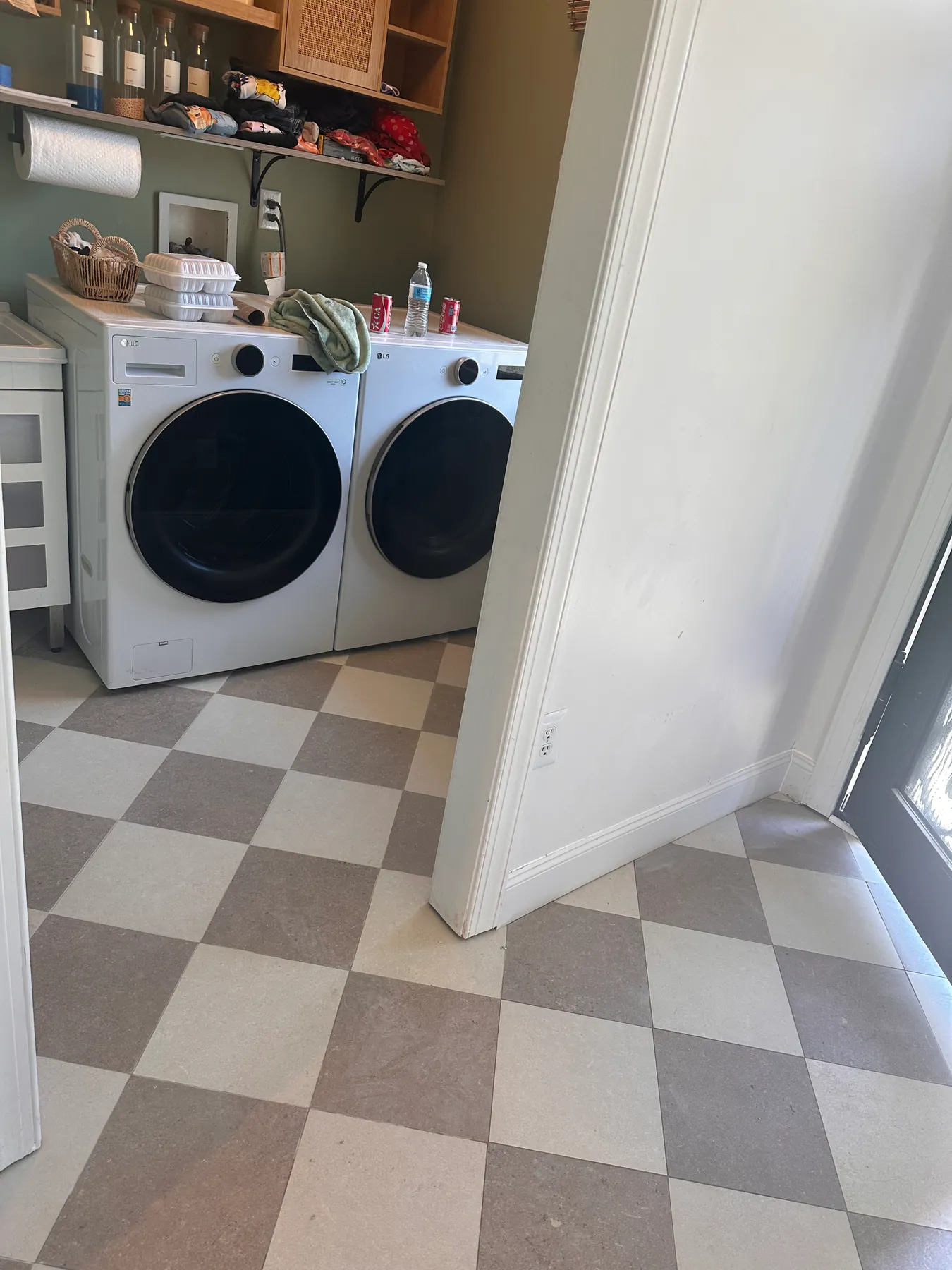
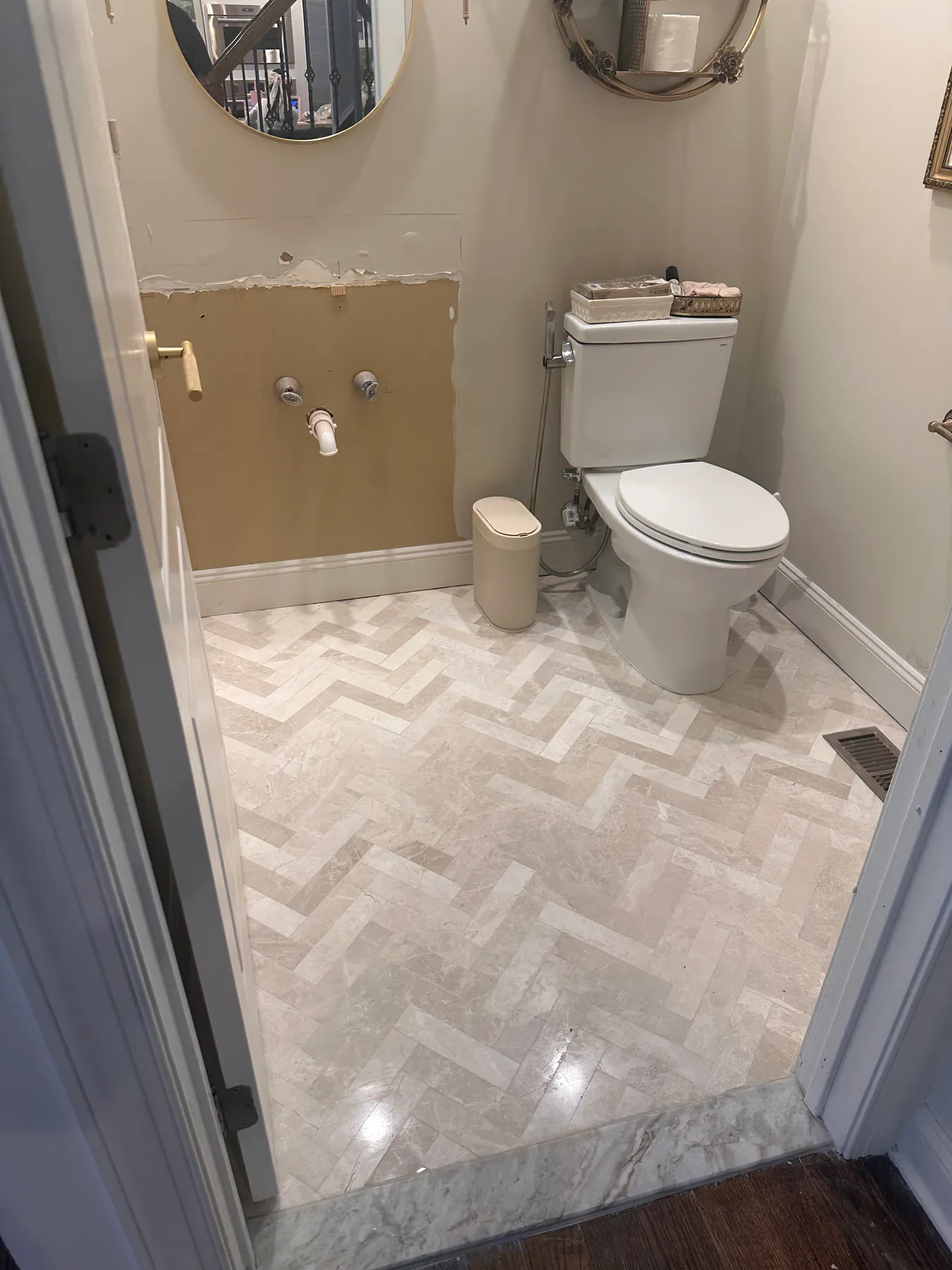
This matters more with a pattern. Herringbone and checkerboard both have to be set off a centreline that is squared to the room rather than to a wall, because rooms are rarely square, and a diagonal pattern will telegraph a wall that is out by half an inch across the entire floor.
Tile flooring we've done
Photographed on the job, in the light the rooms actually get.
What moves the price
We don't quote a square-foot rate sight unseen — anyone who does is guessing. These are the things that actually decide what your job costs.
- Tile size and format
- Large-format needs a flatter substrate and more setting time. Mosaic and small tile mean far more grout line per square foot.
- Pattern
- Straight lay is fastest. Herringbone, checkerboard and diagonal layouts add cuts and waste on every row.
- Substrate work
- Cement board, an uncoupling membrane or levelling compound is priced on top of the tile setting itself.
- Waterproofing
- Showers and wet areas need a proper membrane system, which is materials and labour before a tile is set.
- Natural stone vs porcelain
- Stone is heavier, more fragile to cut and usually needs sealing. Porcelain is more forgiving and needs none.
- Tear-out
- Removing an existing tile floor, especially one set in a mud bed, is heavy work and disposal.
Where we do this work
Bergen, Passaic, Essex, Middlesex, Ocean counties in New Jersey, and Rockland and Westchester in New York. See the towns we cover.
Free estimate
Get a price on your tile flooring.
Free, in person, and we bring the samples to the room they are going in. Call and we will come measure — or send the details and we will call you back.
- Free, in person, with samples
- Seven counties in NJ and NY
- Answered by the man doing the work