

Hardwood floor refinishing in north Jersey
If the boards are sound, refinishing costs a fraction of replacement and the floor you get back is the one the house was built with. Sanded to bare wood, stained to a colour you picked in your own light, then sealed.
Whether your floor is a candidate
The question is thickness. A solid hardwood floor can be sanded several times over its life, and how many is left depends on how much wood sits above the tongue. Boards that have already been taken down close to the fasteners cannot take another pass.
Engineered flooring depends on its wear layer. A thick one can be refinished, a thin one cannot be sanded at all without going through to the core. Deep gouges, water damage that has blackened the grain, or boards that have cupped badly may need replacing in sections before the sanding starts — and those replacements are worth doing first, because they get sanded and finished along with everything else and disappear.
Three grits, then the colour
Sanding runs in stages — a coarse cut to take off the old finish and flatten the floor, then progressively finer passes to remove the scratches the previous grit left. Skipping a grit saves an afternoon and shows up permanently as sanding marks once the stain goes on, because stain settles into every scratch and makes it darker.
Then the colour. Samples go down on your own boards, in your own light, not on a chip in a binder — the same stain reads completely differently on red oak than on white oak, and differently again under a north-facing window than under warm bulbs. You pick from what is actually on your floor.
Finish, and living with the house while it cures
Waterborne finishes dry fast, carry almost no odour and stay clear over time. Oil-modified finishes take longer, smell stronger while they cure and amber slightly as they age — which some people want on older oak and some do not.
Either way the floor needs to be left alone while it cures, and that is worth planning around before the work starts rather than discovering halfway through. We will tell you what the schedule looks like for the finish you choose, including when furniture can come back.
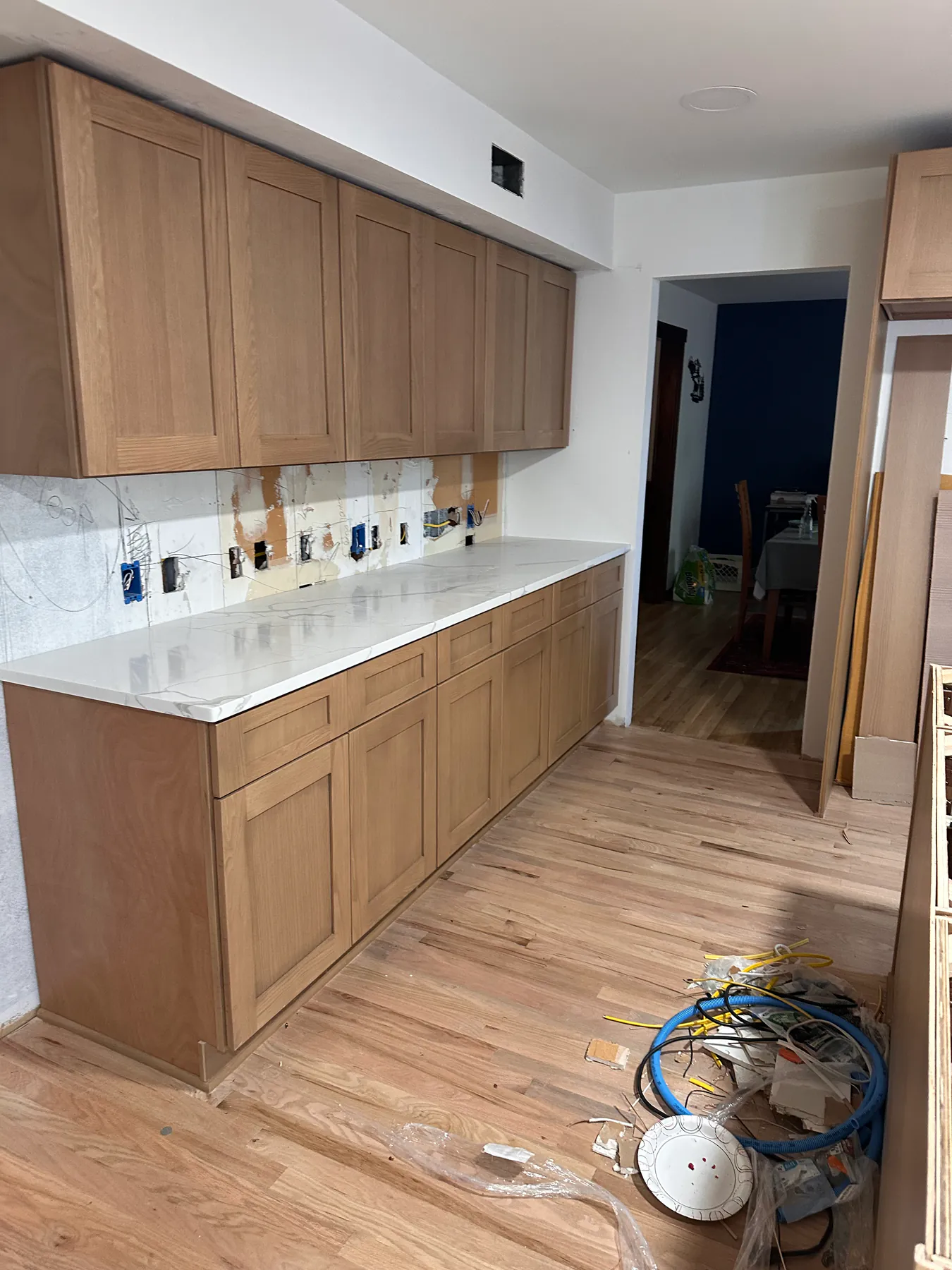
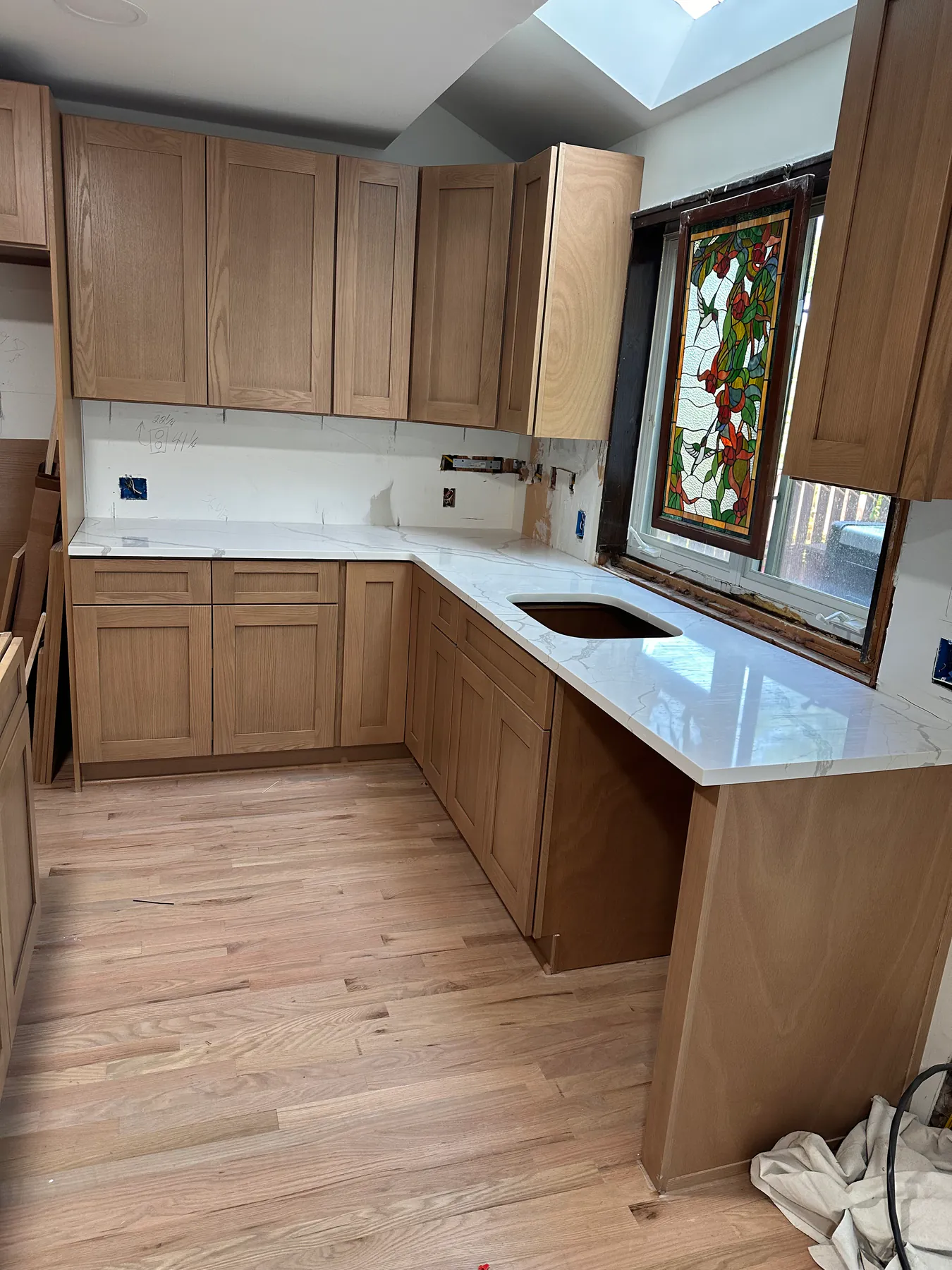
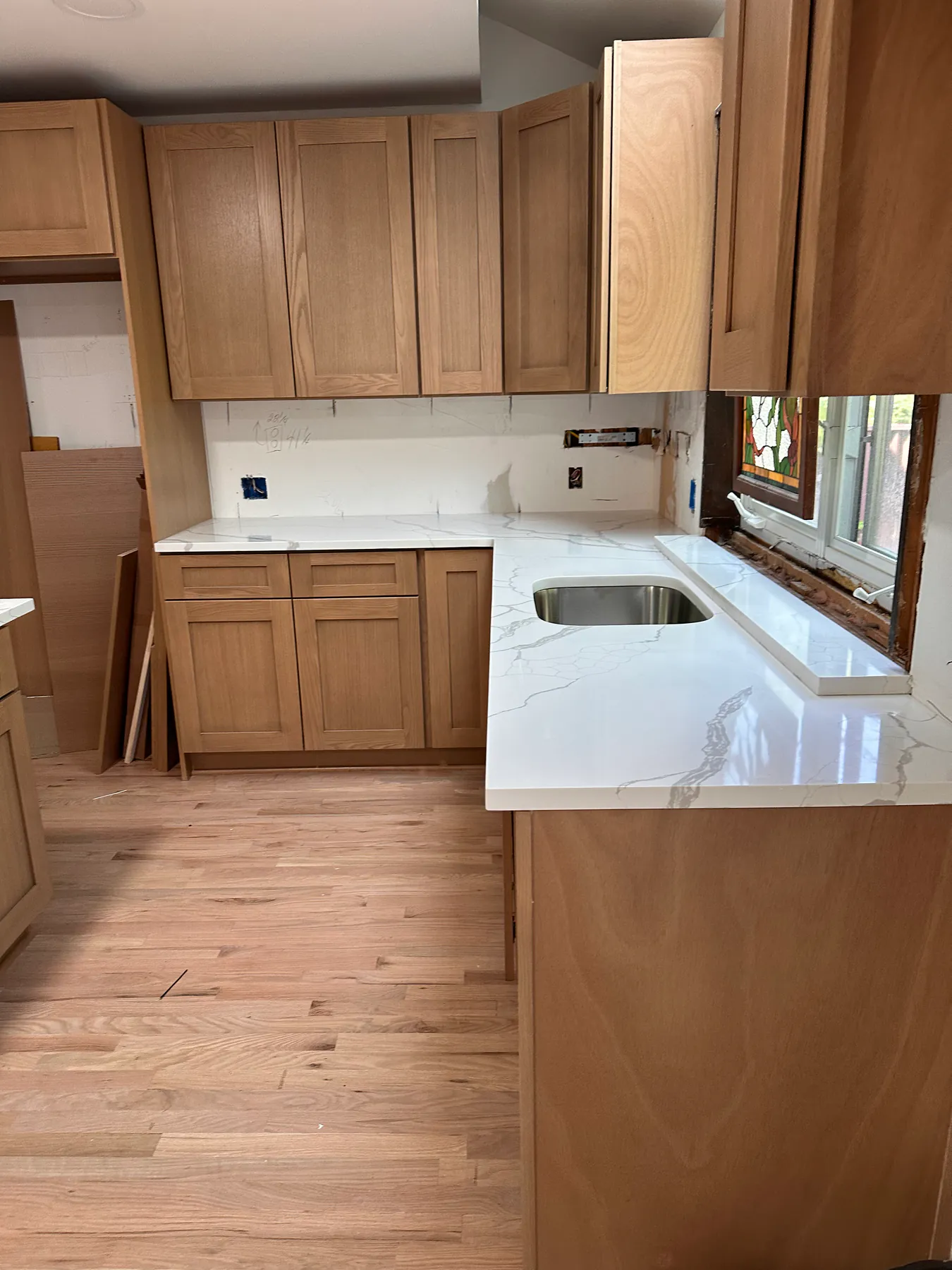
Wood floor refinishing we've done
Photographed on the job, in the light the rooms actually get.
What moves the price
We don't quote a square-foot rate sight unseen — anyone who does is guessing. These are the things that actually decide what your job costs.
- Square footage
- The single biggest driver. Sanding is priced by area and larger open floors are more efficient per square foot.
- How many coats
- More coats mean more curing days and more labour, and hold up longer in a hallway or kitchen.
- Stain or natural
- A clear finish skips a full stage. Staining adds an application and drying time before sealing.
- Repairs first
- Replacing damaged boards, filling gaps or re-securing squeaking sections is work that happens before sanding.
- Stairs
- Treads and risers are hand work — no big machine reaches them — so they are priced separately from the floor.
- Finish type
- Waterborne generally costs more per gallon than oil-modified but returns the room to you sooner.
Where we do this work
Bergen, Passaic, Essex, Middlesex, Ocean counties in New Jersey, and Rockland and Westchester in New York. See the towns we cover.
Free estimate
Get a price on your wood floor refinishing.
Free, in person, and we bring the samples to the room they are going in. Call and we will come measure — or send the details and we will call you back.
- Free, in person, with samples
- Seven counties in NJ and NY
- Answered by the man doing the work