

Hardwood flooring in northern New Jersey
Solid and engineered hardwood, nailed, glued or floated depending on what is underneath it and which floor of the house it is going on. Red oak, white oak, maple and engineered plank.
The subfloor decides more than the wood does
Before anything is ordered we check what the new floor has to sit on. Plywood over joists takes a nail-down installation. A concrete slab — common in a basement or a slab-on-grade ranch — will not take nails at all, which is what pushes those rooms toward engineered plank, glue-down or a floating installation.
Moisture is the other half of it. Wood moves with the humidity around it, so material gets delivered and left in the room for a few days before a single board goes down. Skipping that acclimation is why a floor laid in a hurry in February opens gaps along every seam by August.
Racking, and why the seams matter
Boards get laid out dry across the room before any are fastened — racking. It sets where the end seams fall so they stagger properly instead of stacking into a stair-step pattern down the floor, and it puts the shortest pieces where furniture and traffic hide them.
It also means the colour variation gets spread across the room rather than pooling. Natural wood arrives with light and dark boards in the same bundle; laid straight out of the box you end up with a pale patch by the window and a dark one in the corner.
Where the job actually ends
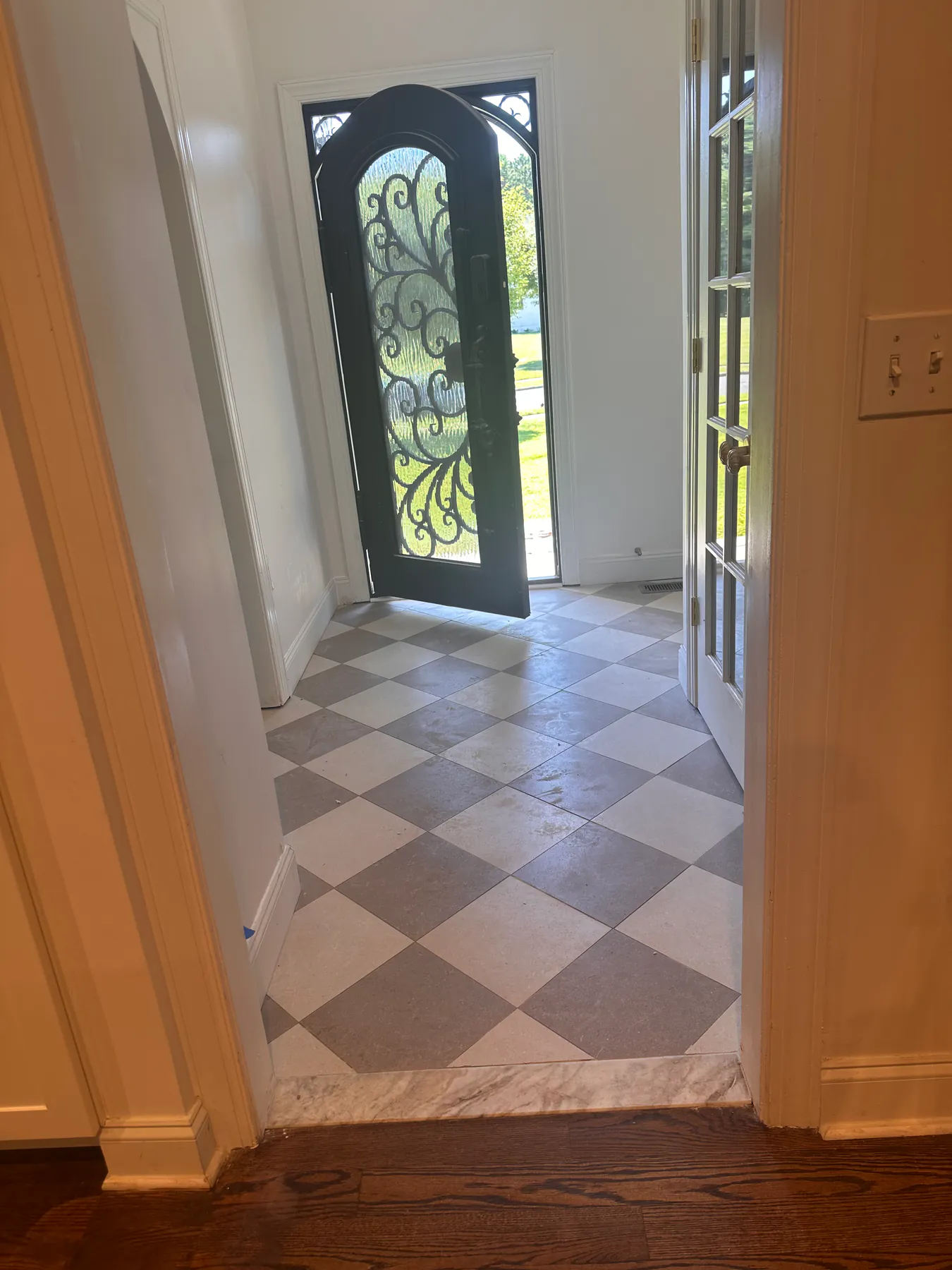
Transitions, thresholds and shoe moulding are the parts most people notice and most quotes leave vague. Where hardwood meets tile, the two have to land level and the joint has to sit under the door, not in the middle of the opening. Where it meets carpet, the edge needs a proper transition rather than a strip of trim laid over a rough cut.
We handle those pieces rather than leaving them for a trim carpenter, because the cut and the transition are the same decision made twice.
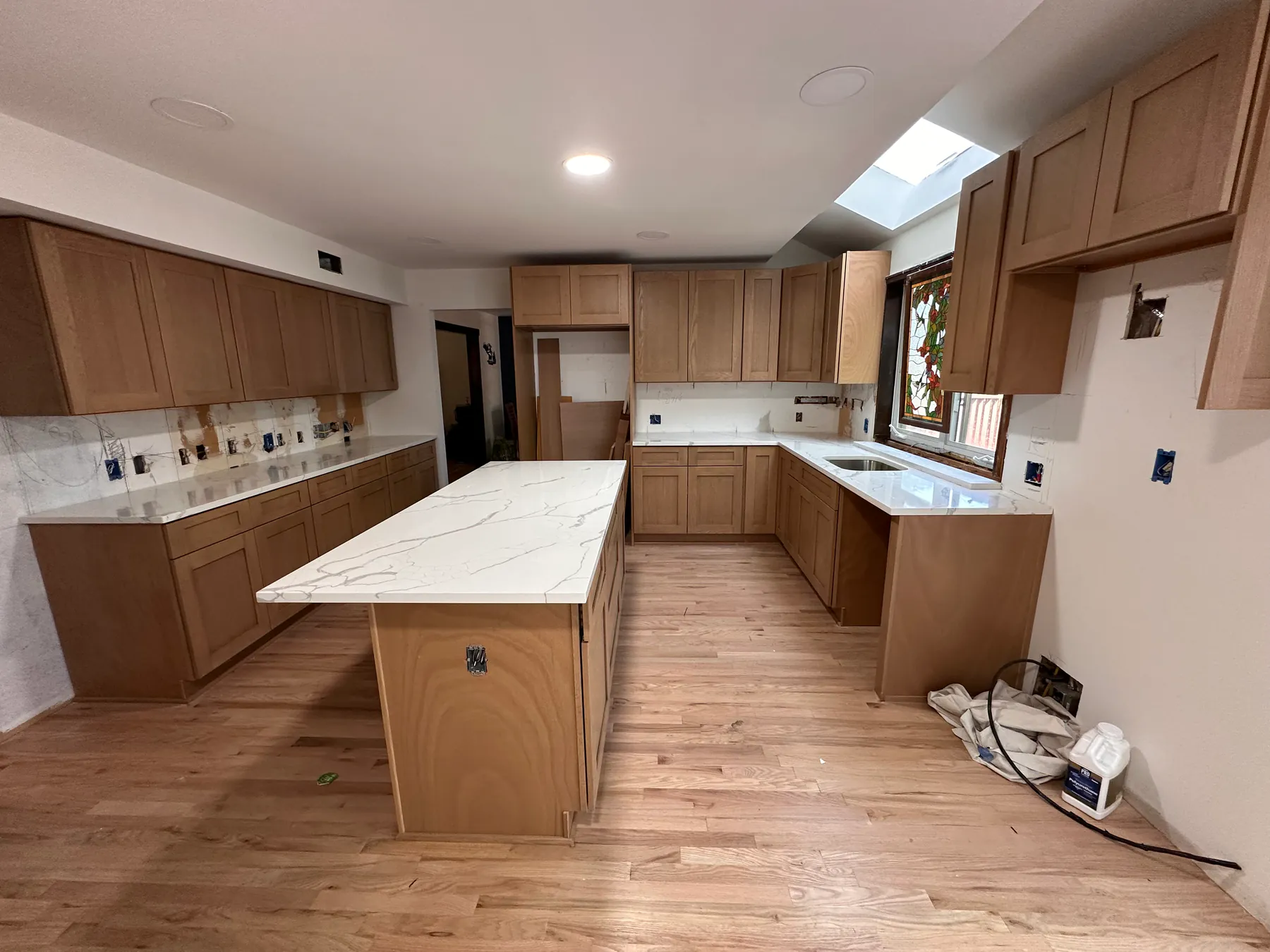
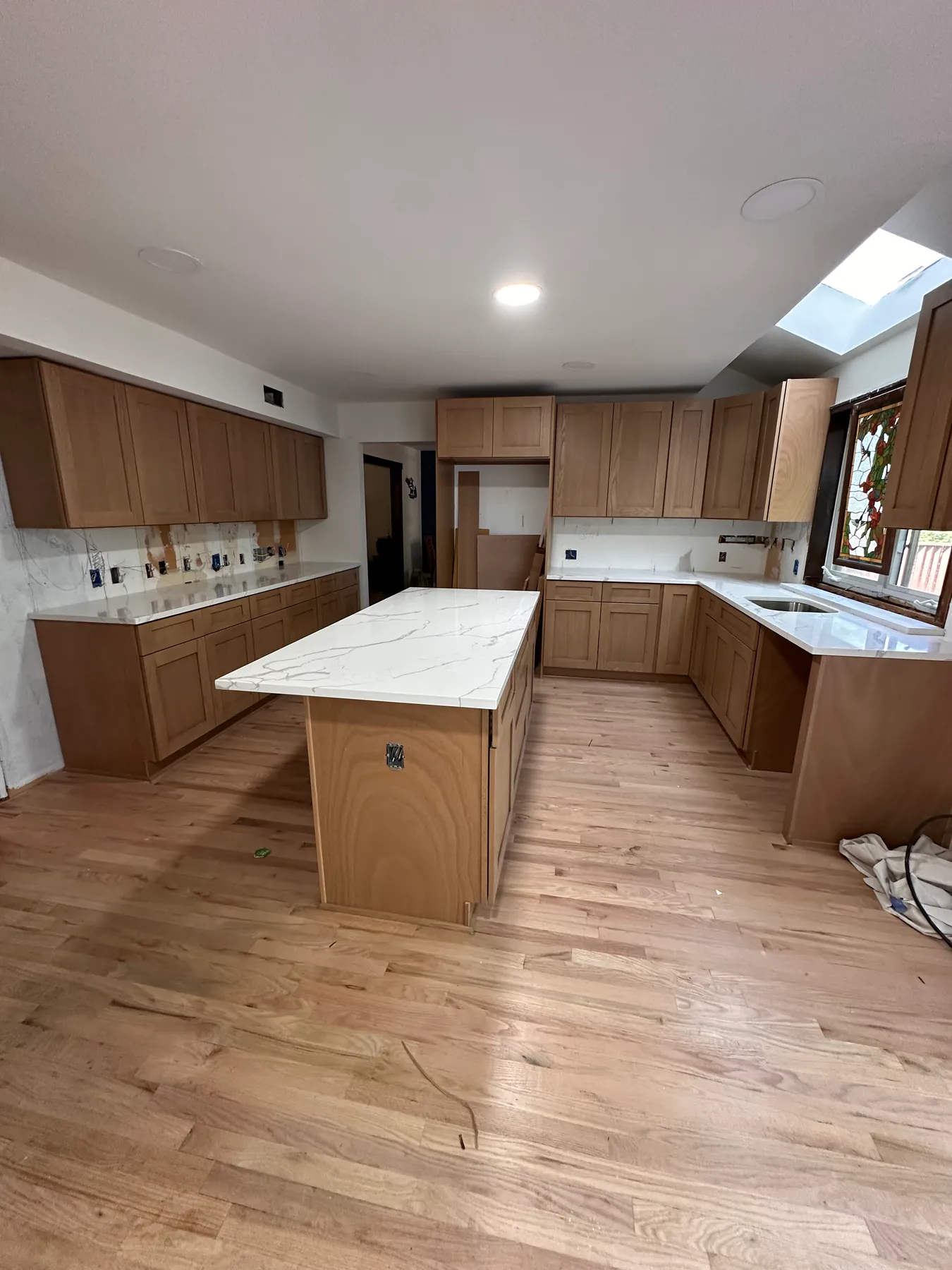
Wood flooring we've done
Photographed on the job, in the light the rooms actually get.
What moves the price
We don't quote a square-foot rate sight unseen — anyone who does is guessing. These are the things that actually decide what your job costs.
- Solid or engineered
- Engineered handles slab and basement installs that solid wood cannot; solid can be refinished more times.
- Species and grade
- Red oak is the baseline. White oak, maple and anything wider or longer costs more per square foot.
- Subfloor condition
- A flat, sound subfloor installs straight. Levelling, patching or replacing sections adds labour before any wood is laid.
- Nail, glue or float
- Set by the subfloor and the grade level, not by preference. Glue-down over concrete costs more than nail-down over plywood.
- Room count and layout
- Doorways, closets, stairs and angled walls all add cuts. One open room is faster per square foot than four small ones.
- Removing the old floor
- Tear-out and disposal is real labour, and glued-down vinyl or tile takes longer to lift than carpet.
Where we do this work
Bergen, Passaic, Essex, Middlesex, Ocean counties in New Jersey, and Rockland and Westchester in New York. See the towns we cover.
Free estimate
Get a price on your wood flooring.
Free, in person, and we bring the samples to the room they are going in. Call and we will come measure — or send the details and we will call you back.
- Free, in person, with samples
- Seven counties in NJ and NY
- Answered by the man doing the work