

Luxury vinyl plank flooring in north Jersey
Waterproof through the whole thickness, quiet underfoot, and hard to tell from wood at standing height. It is what most basement, kitchen and rental jobs get, and for good reasons.
Why it goes where wood cannot
Luxury vinyl is waterproof through the plank rather than coated on top, so a dishwasher that leaks overnight or a basement that takes water in a storm does not automatically mean a new floor. It handles a dropped pan without denting the way softer species do, and it does not move with the seasons the way solid wood does.
That combination is why it ends up in kitchens, basements, laundry rooms and rentals. It is also genuinely quieter and warmer underfoot than tile, which matters in a room people stand in.
The subfloor is where bad vinyl jobs come from
Vinyl plank is thin and flexible, so it does not bridge anything — it conforms. Every hump, dip, seam ridge and old adhesive lump in the subfloor telegraphs straight through to the surface, and it shows worst in raking light along a wall of windows, which is exactly where people notice it.
So the floor gets flattened first: high spots ground down, low spots filled with levelling compound, old adhesive scraped, loose subfloor screwed back down. That prep is most of the labour on a vinyl job and it is the thing that separates a floor that still looks flat in three years from one that looks lumpy in three months.
Click-lock or glue-down
Click-lock planks float as one sheet over the subfloor, which makes them faster to install and forgiving of small subfloor movement — but they need an expansion gap around the whole perimeter, hidden under the baseboard or shoe, or the floor has nowhere to go when it warms and it buckles.
Glue-down is bonded to the subfloor. It costs more in labour and demands a flatter substrate, but it is more stable underfoot, better over large open areas, and handles heavy rolling loads better. Which one you want depends on the room, not on price alone.
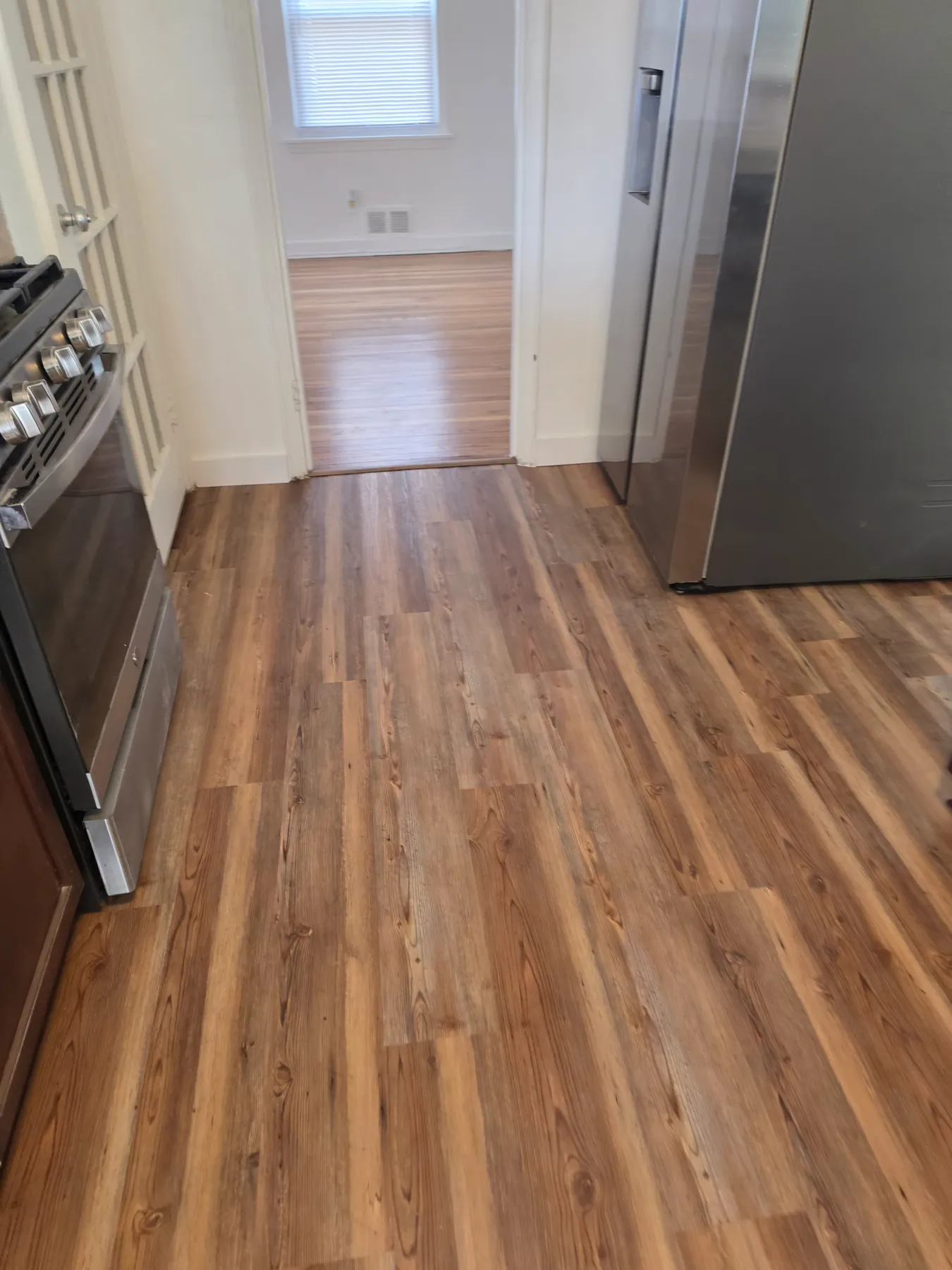
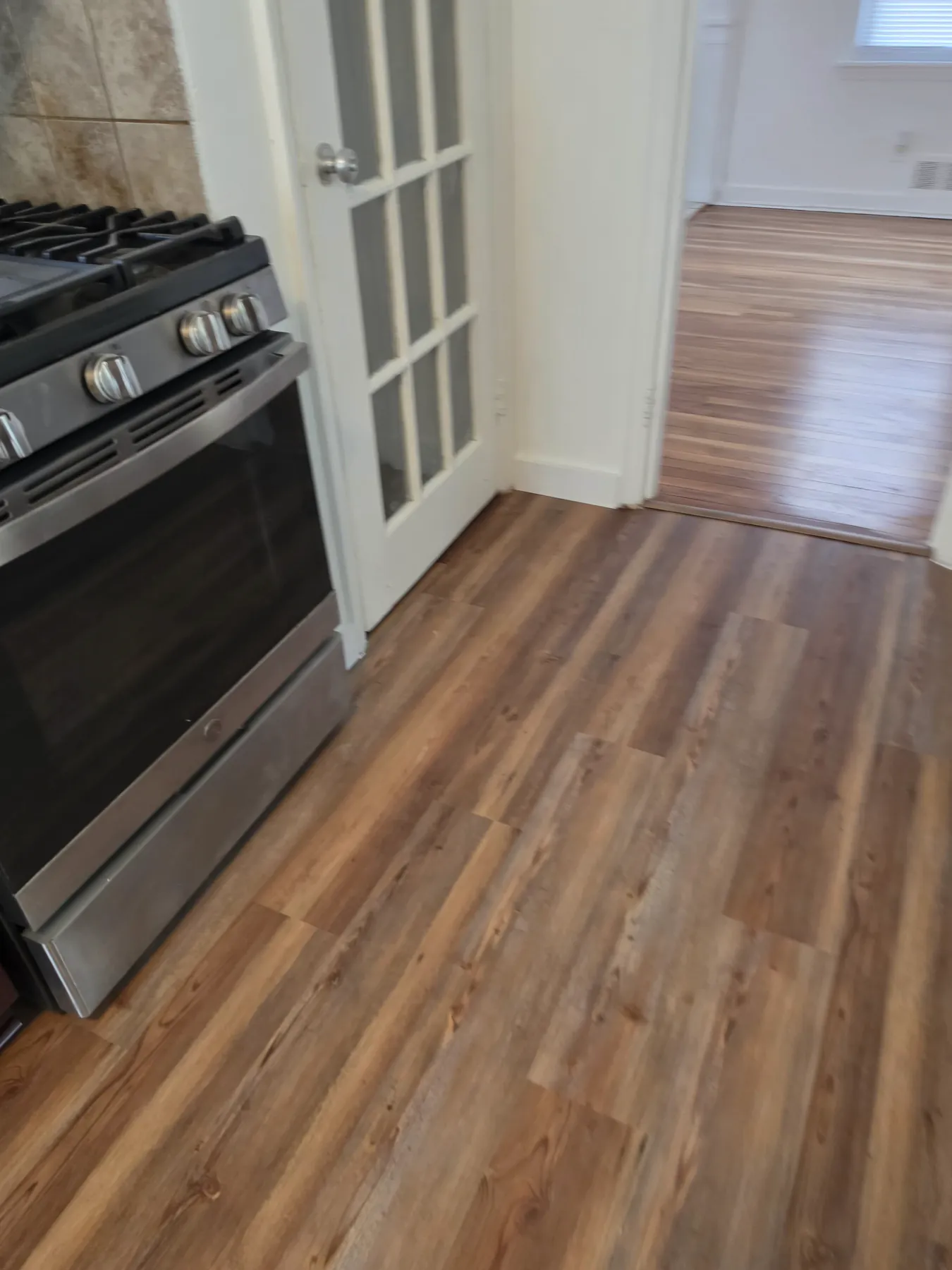
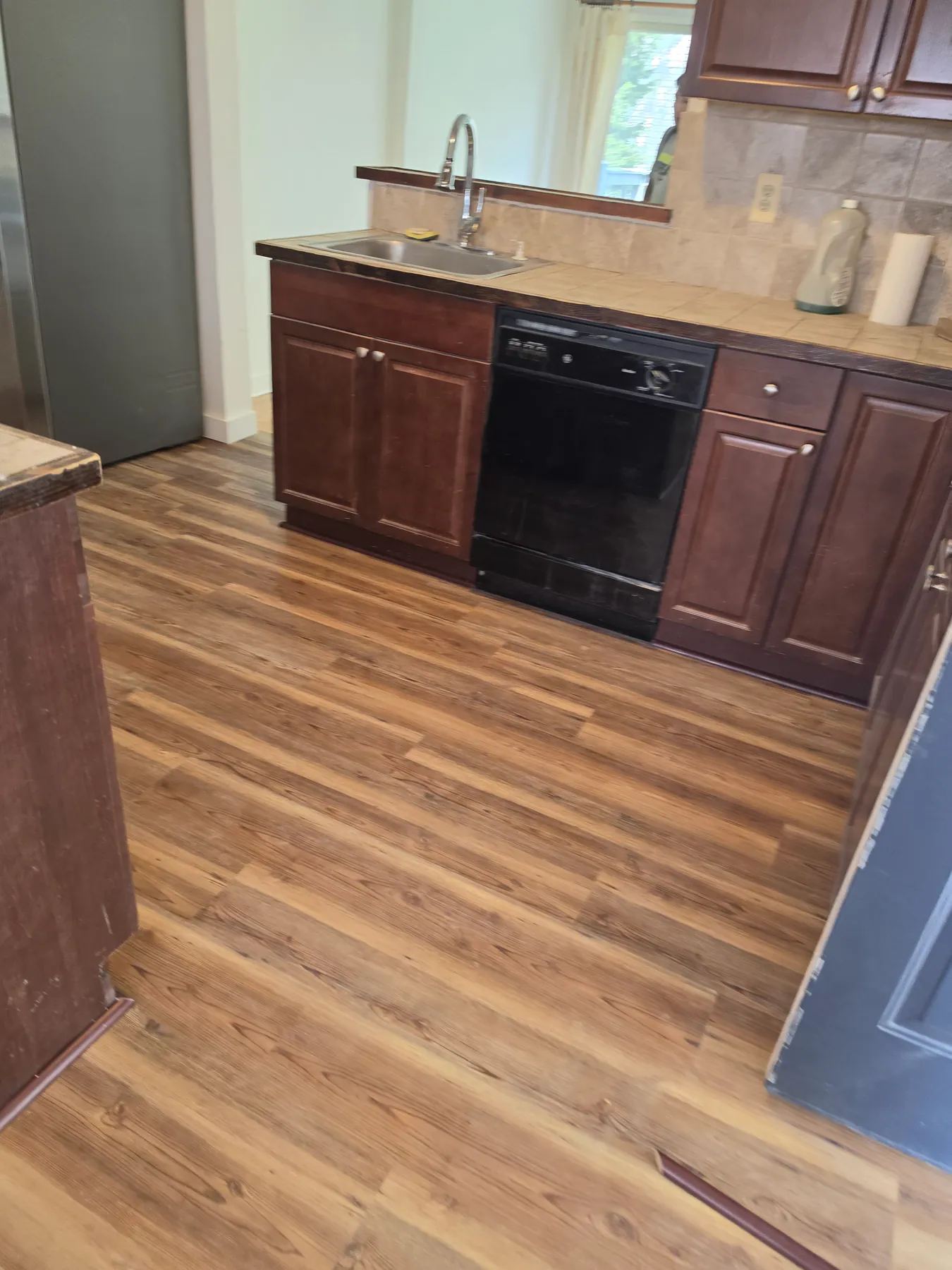
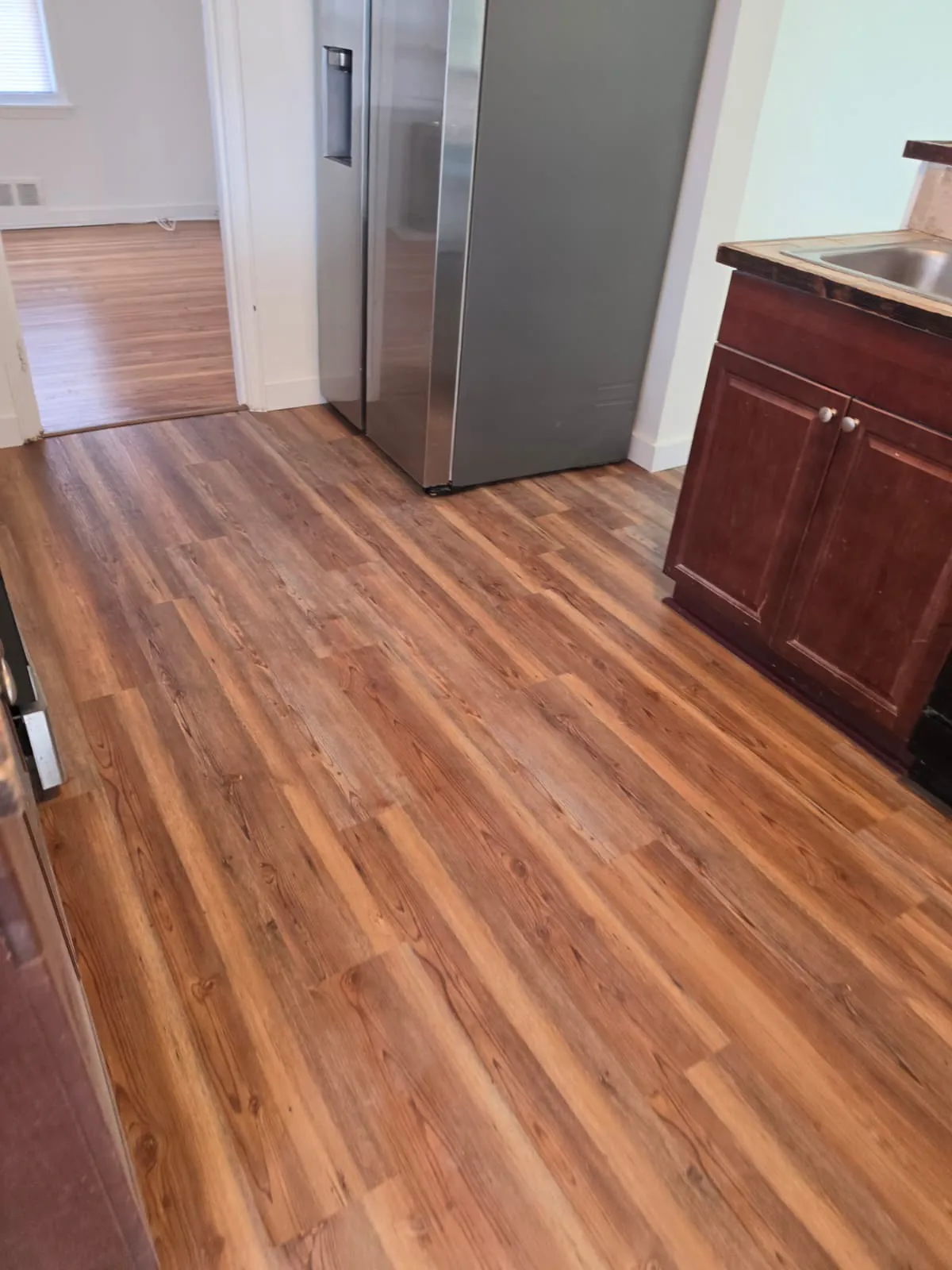
Vinyl flooring we've done
Photographed on the job, in the light the rooms actually get.
What moves the price
We don't quote a square-foot rate sight unseen — anyone who does is guessing. These are the things that actually decide what your job costs.
- Subfloor prep
- The main variable. A flat, clean subfloor installs quickly; grinding, levelling and adhesive removal add real hours.
- Click-lock or glue-down
- Glue-down costs more in labour and demands a flatter substrate, but is more stable over large areas.
- Plank thickness and wear layer
- A thicker wear layer costs more and lasts longer under traffic, pets and chairs.
- Underlayment
- Some planks have it attached; otherwise it is separate, and it changes sound and comfort noticeably.
- Room layout
- Doorways, closets and irregular walls add cuts and waste. Long straight runs go fastest.
- Tear-out
- Lifting carpet and pad is quick. Removing glued-down tile or sheet vinyl is not.
Where we do this work
Bergen, Passaic, Essex, Middlesex, Ocean counties in New Jersey, and Rockland and Westchester in New York. See the towns we cover.
Free estimate
Get a price on your vinyl flooring.
Free, in person, and we bring the samples to the room they are going in. Call and we will come measure — or send the details and we will call you back.
- Free, in person, with samples
- Seven counties in NJ and NY
- Answered by the man doing the work